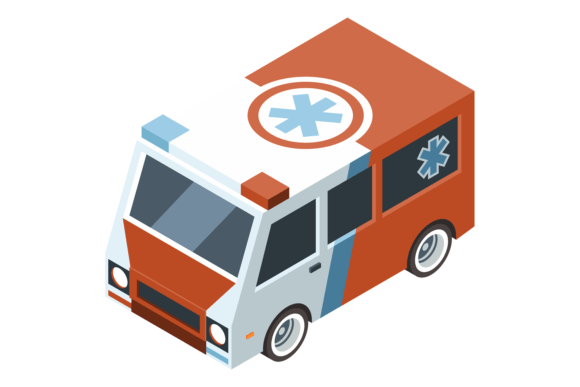
A Designer's Take on the Isometric Ambulance Embroidery File
Whenever a new embroidery design lands on my desktop, I don't just look at the preview. I envision it stitched. I think about the thread colors catching the light on a sweatshirt, how the details will hold up after a dozen washes, and the kind of customer who would be delighted to see it on their custom gift. So, let's walk through the Isometric Ambulance. Medical Service Car from that very practical, in-the-hoop perspective.
The Immediate Visual Appeal: Clean, Confident, and Ready for Duty
First impressions matter, both for me as the embroiderer and for the eventual customer. This design has a distinct personality. The isometric style gives it a modern, almost architectural feel—it's not a cartoon ambulance, but a graphic, structured representation. This creates a mood of reliability and professionalism. The layout is balanced, with the vehicle centrally focused and those clean, geometric lines.
That level of detail is its biggest strength. There’s enough visual information to make it interesting—the suggestion of windows, wheels, and the classic ambulance silhouette—without being overly complex. This is a huge plus for embroidery projects. Too much minute detail can turn into a muddy mess of stitches; this design feels engineered for clarity. Its visual personality leans towards crisp and contemporary, which opens doors beyond traditional "medical" themes. Think modern nursery decor for a pediatrician's family, a unique gift for an EMT, or even a cool, graphic patch for a healthcare student's backpack.
Where This Ambulance Design Shines in Real Projects
In my work, a design’s true value is proven on the fabric. Here’s where I believe the Isometric Ambulance would perform exceptionally well.
For custom apparel like polo shirts or sturdy tote bags, it would look sharp and official. It’s the kind of graphic that enhances perceived value—it feels purposeful, not generic. For a small business selling handmade products to healthcare workers, embroidering this onto a high-quality apron or a pillow cover for a clinic break room would speak to a niche audience with confidence. I can easily picture it on a navy blue cap, the white and red stitches popping against the dark background.
As a personalized gift, it’s a winner. A baby blanket with this design, perhaps paired with a name, for a newborn in a medical family is a thoughtful, lasting present. Its clean lines would translate beautifully to a tea towel or a simple canvas patch, perfect for a holiday gift basket. For Etsy sellers and craft fair vendors, this design adds a specialized item to your lineup—something that catches the eye of a specific customer and feels made just for them.
From a commercial standpoint, its clarity makes it excellent for digital product previews and printable mockups. If you're selling the finished embroidery as a digital design asset, the clean SVG and transparent PNG formats mentioned are crucial for creating professional listings.
Practical Considerations Before You Stitch
No design is perfect for every scenario, and a seasoned embroiderer always knows the limits. The isometric style, with its straight lines and angles, requires some forethought.
On small hoop sizes or on highly textured fabrics like some sweaters, those sharp corners might need extra attention to stay crisp. On thin or stretchy fabric, a good stabilizer is non-negotiable to prevent distortion of those geometric shapes. The design’s strength is its graphic quality, so you want to preserve that.
Embroidering on dark fabric would be a classic choice (think a black sweatshirt), but you must plan your thread color contrast. The provided white background in the preview is helpful, but you need to visualize how the main colors will interact with your chosen garment. I’d also be cautious about placing it on a heavily curved surface like the side of a fitted cap without testing first—the perspective might look warped.
The details aren't overly tiny, but areas like the vehicle's windows will likely use fill stitch. You should check the stitch density in your software before running the file. High density in a small area can make the fabric stiff. Always, always test the design on scrap fabric first, using the same material and stabilizer as your final project.
Designer Notes for a Smooth Project
My workflow for a design like this always includes a few key steps:
- Test in both light and dark fabric mockups digitally to finalize thread choices.
- Check the actual file formats (EPS, JPG, SVG, PNG) for compatibility with my embroidery software and for any commercial use in digital product sales.
- Confirm the licensing terms before selling any finished product or the file itself. This is critical for small shop products and commercial embroidery.
- For a design with defined lines, consider if parts could be effectively done with a satin stitch for smoothness or a running stitch for outline detail.
- Remember, this is categorized as Illustrations and Graphics. That means it's likely versatile, but ensure it stitches as cleanly as it looks on screen.
The Final Verdict: A Trustworthy Asset for Specific Creations
So, would I use the Isometric Ambulance. Medical Service Car design in my own work or recommend it to fellow makers? Absolutely, for the right projects.
Its visual appeal translates directly into stitching clarity and a professional finished look. That builds customer trust—they see a polished, intentional handmade product. For brand consistency, if your shop caters to medical professionals or service-oriented clients, this design fits that identity perfectly. Its graphic nature makes it highly giftable and gives it instant recognition.
It's not a design I'd use for a delicate, flowing blouse or where ultra-fine detail is required. But for robust apparel decor, sturdy tote bags, impactful patches, and thoughtful personalized products, it’s a solid, reliable file. It tells a story of service and care in a modern visual language, and that’s a powerful combination in the world of craft business. Just do your practical homework—test, check licensing, and choose your fabric wisely—and this ambulance will be ready to roll beautifully off your embroidery machine.